For African literary criticism: Interview with the founder of francophone ‘African literary chronicles’
By Jean-Christophe Brunet · 2023-10-02
Reported by Jean-Christophe Brunet. Originally published by Global Voices on 02 October 2023. This is an archived report; dates and circumstances refer to its original publication.
The award of the Goncourt Prize , a prestigious French literature award, to Senegalese author Mohamed Mbougar Sarr in 2021 marks the first recognition of a sub-Saharan author by this institution in nearly 120 years . Does this mean that Francophone African literature is finally being shared and recognised on the international level?
In response to this question, Global Voices interviewed Réassi Ouabonzi, who also goes by the name Lareus Gangoueus about his engagement with African literary media. Ouabonzi, originally from Congo and currently residing in Paris, is an IT consultant. He has been the curator of the literary blog ‘Chez Gangoueus’ (At Gangoueus’) since 2007 and actively contributes to the collaborative platform ‘Chroniques littéraires africaines’ (African literary chronicles). Additionally, he co-founded the literary programme ‘Les lectures de Gangoueus’ (Gangoueus’ reads) with Guy Padja , which he hosts on the alternative media outlet SudPlateau TV .
Today, more people speak French on the African continent than anywhere else on Earth, which means that the language could potentially become the third most widely spoken language in the world by 2050 .
To learn more about the words and terms created and used in Francophone Africa, read the column “ Les mots ont la parole ” (Words have their say).
The interview with Ouabonzi took place in French via email following an extensive conversation at a Parisian café.
Filip Noubel (FN): African literature, both Francophone and others, are only just beginning to receive the attention they deserve outside the continent. How do you explain the long silence from Western publishers, and what initiatives in Africa and elsewhere are changing the landscape?
Réassi Ouabonzi (RO): It's a real challenge to answer this question concisely. In the Francophone space, French publishers have historically included the voices of African and Afro-Caribbean writers. The Guyanese writer René Maran, for instance, received the Goncourt Prize in 1921 for his work that explored the thorny subject of colonisation from the perspective of an Afro-Caribbean colonial administrator.
Francophone literature from the global south has long been considered peripheral and thus marginal. One could find a statistical justification for this context: a disproportion between the massive production of French authors and that of post-colonial authors. I believe the answer lies with the French Academy: the only African who ever sat on it was Léopold Sédar Senghor, and he passed away a long time ago. If the French elites aimed to be more inclusive, they wouldn't hesitate to maintain representatives of the evolution of the French language in Africa. We are talking about several hundred million speakers of this language. But symbolically, it seems more appealing to have figures like François Cheng or Andréï Makine in that arena. Don't ask me why…
FN: You created ‘ Chroniques littéraires africaines ’ as well as the podcast ‘ Chez Gangoueus ,’ primarily focused on Francophone African literature. How did this initiative develop?
RO: In 2007, I launched a literary blog called ‘Chez Gangoueus,’ which I still manage. Over the years, writers, journalists, and academics have offered literary critiques. However, the blog’s structure didn’t provide contributors with dedicated spaces. In 2019, along with other passionate readers, we launched the ‘Chroniques littéraires africaines’ website. It uses a flexible WordPress platform, which allows free article to be published and aims to demystify the act of blogging, particularly the production of literary critiques with collaborative article proofreading. Currently, we have eighteen contributors who publish according to their availability and interests. The podcast serves a different purpose: it provides a platform to various figures in the world of literature. This allows me to interview enthusiastic readers, publishers, authors, translators; using an audio medium provides considerable freedom.
FN: What are the challenges for volunteer-driven online projects? What does this project offer to its creators? What is your long-term vision?
RO: That’s a very diifcult question. Retaining creators can be complex because contributors may feel that their volunteer efforts aren’t necessarily recognised. Financially, that’s not the case, at least not yet. The challenge of maintaining quality is crucial in this context. Publishing on ‘Chroniques littéraires africaines’ can be seen as an additional line of expertise on a student’s CV. Another advantage of the platform is the interaction with a wide range of individuals: enthusiastic readers, journalists, students, academics scattered across Africa and Europe.
In essence, from these potential exchanges, I hope to foster more demanding, engaging, and comprehensive literary criticism. We have several contributors based in Africa, and the statistics speak for themselves: the majority of our audience who reads our analyses are from this continent. Our goal is to have writers covering all cultural areas of Africa to better uncover literary gems and also to challenge publishers with the demands of objective criticism.
FN: Within the expansive landscape of contemporary African literary creation, which names, countries, or trends inspire you the most?
RO: For me, Nigeria stands out as the most intriguing country in terms of its authorial output. One should delve deeper into why such a disruptive creative force exists. However, the generation following Chimamanda Ngozi Adichie , whether they write from Nigeria or in the West, challenges readers with the power of their content. They engage with themes of politics and society while asserting Afro-responsibility. Authors such as Elnathan John and Ayọ̀bámi Adébáyọ̀ come to mind.
Within the Francophone realm, a new wave is emerging, featuring young talents who are maturing as writers over the years, like Jussy Kiyindou from Congo, Elgas and Mohamed Mbougar Sarr from Senegal, Jo Güstin and Max Lobé from Cameroon, and Hakim Bah from Guinea. I’ve observed a new profile of writers who have been gaining prominence in Africa in recent years. These are high-ranking civil servants or senior executives who have typically spent their entire professional careers in Africa and have come to writing — or at least to publication — later in life. They deal with themes from social revolt, to the treatment of marginalised individuals, to a critical examination of violent political systems, and the necessity of shaping the new generation. Some notable examples include Ibrahima Hane , Ameth Guissé , Abdoul Kane from Senegal, Mahmoud Soumaré from Ivory Coast, and Vincent Kalimasi from Congo.
For an introduction to Congolese literature, read: A literary landscape in flux: Fiston Mwanza Mujila's take on Congolese and diasporic literature.
Image credit
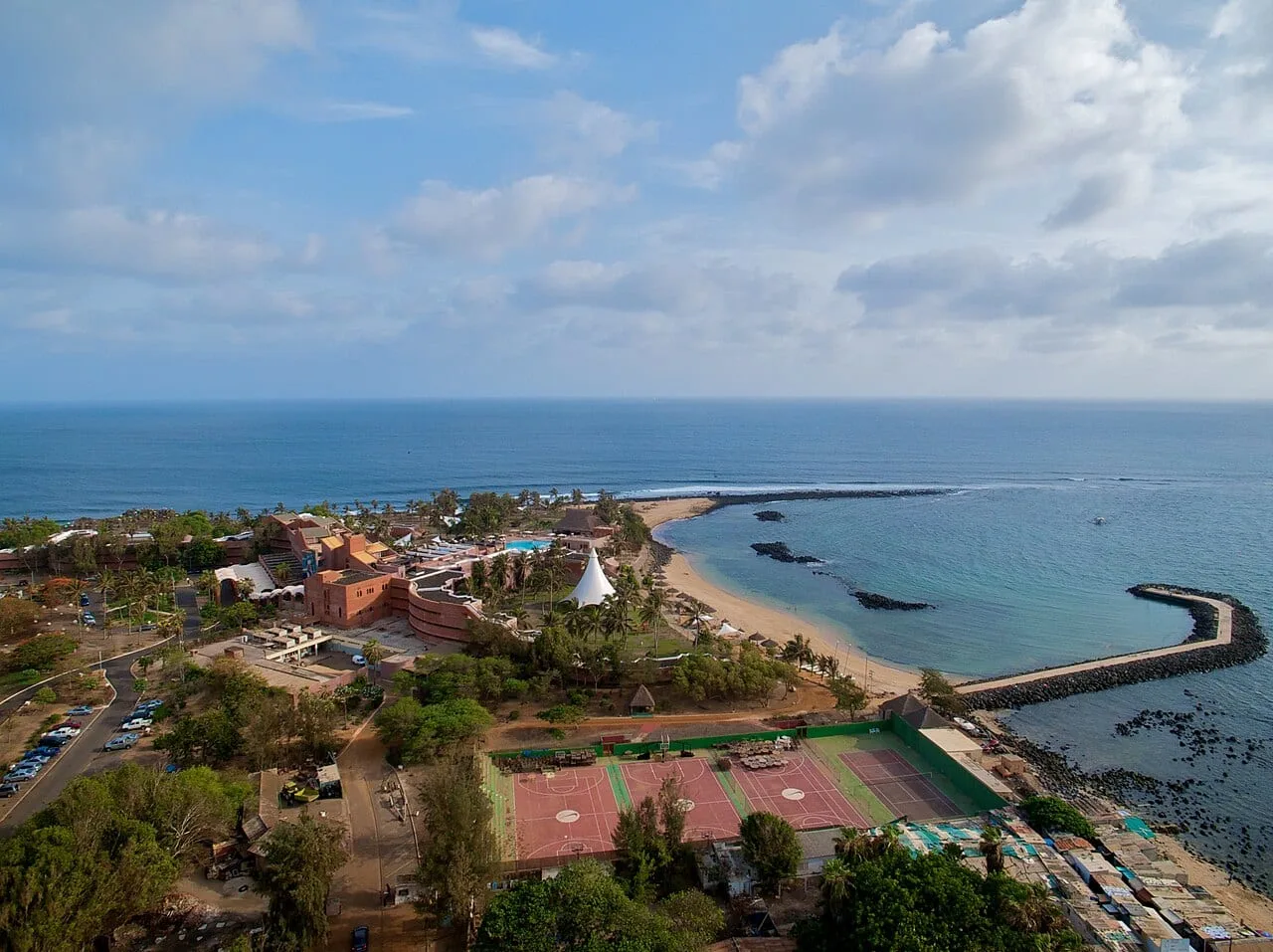
Cover context image: Pointe des Almadies - Senegal. This archival or illustrative image is not presented as a photograph of the reported event. Creator: Jeff Attaway. Original image and full attribution. License: CC BY 2.0. Resized and compressed for web display; the image retains its stated license.
Publication credits
Written (Français) by Filip Noubel Translated (English) by Jean-Christophe Brunet. Original report published by Global Voices. Republished under Creative Commons Attribution 3.0. Adapted for Gistmax: formatting simplified; duplicate original-language quotations and embedded media omitted; cover photograph replaced. This republication does not imply endorsement of Gistmax by the author or publisher.