A Central African designer is transforming sneakers into portable manga in Senegal
By Adam Long · 2023-09-19
Reported by Adam Long. Originally published by Global Voices on 19 September 2023. This is an archived report; dates and circumstances refer to its original publication.
Manga has its fans in Africa too, and they want to wear their favourite characters on their clothes, including their shoes.
Japanese manga is a cartoon style of Japanese origin known for the originality of the stories they tell, either in black and white or colour. Initiated as far back as the 18th century by Katsushika Hokusai , the great Japanese painter and cartoonist, manga has gone on to enjoy great success in Asia and has become popular today on every continent.
Comics are an art in their own right, not to mention an industry that has garnered millions of fans worldwide. They are also often shown as animations on TV channels, which extends the audience to the youngest children. There are even those who find in them a source of inspiration for creating employment opportunities and making their name in the entrepreneurial sphere.
This includes the young Central African Gabriel Gabs Abens , a marketing and business strategy student in Dakar, Senegal. Gabriel lives in a difficult general economic context: the unemployment rate in Senegal stands at 21.9 percent as of the 4th quarter of 2022 , and the average income per month is FCFA 124,618 (USD 207.78) at the same point in time. But this seems not to have prevented him from making his mark: Gabriel defines himself as a “bespoke artist,” his art being that of stenciling manga characters on sports shoes, T-shirts, denim jackets, gaming consoles, and joysticks, to each customer's specification.
This video dispatch from Brut Afrique illustrates the work Gabriel undertakes to highlight his talent as a bespoke artist.
Curious to enter into his universe, to share his concept and the opportunities this innovation in Senegal's art world offers, Global Voices chatted with the artist.
Jean Sovon (JS): What is your concept?
Gabriel Gabs Abens (GGA): The idea came to me from Japanese mangas. I've been inspired by the characters in these animations which everyone loves nowadays to give a unique look to every item I customize. The idea behind it is to make each product unique, so that you can't see it anywhere else.
JS: What is your creative process?
GGA : I copy existing characters, and to that I add my personal touches to make the final product unique. Given that there are many fans across the world, keen to have personalized items in the image of their favorite manga characters, and that's just where I come in. I put the fans’ favorite characters right on to these items.
JS: How did you discover Japanese manga and why have you made it a major source of inspiration?
GGA : The discovery was very simple. But first, I started off drawing at the age of eight: my first design wasn't manga but Batman. While watching television, I fell in love with that. But, growing up, I saw all over the place that this was happening, especially in Europe, where people personalize items based on what they love to do, on their passion. So, I made a start, but, after a while drawing on paper, I asked myself, why not try a medium other than paper? In my researches on the internet, I saw another guy doing this on shoes. I found out everything it took to work bespoke, and everything started from that.
JS: You've gone from paper to shoes — can you envisage moving on to another medium?
GGA : Besides shoes, I customize many other items. Gaming consoles, joysticks, jackets. I've even tried with a tailor friend to customize boubous , and he sold every one. So, yes, I draw my designs on surfaces other than shoes.
JS: Who are your customers? Do they bring you a living?
GGA : At first, my customers were basically young people from 10 to 25. But weirdly, there are older folks, over 30s, who are also manga fans and form a segment of my customers. They want to have customized items in their homes too.
Mainly my customers are abroad because they pay better there. I'd say my subscribers on social networks are mainly Senegalese, whereas my customers are often in France, the USA, and so on
Today, I live on this work alone, especially when I get orders from abroad, because the customer pays in euros or in dollars. Then I convert the currency into CFA, and that lets me balance my monthly income.
JS: What is the place of social networks in the promotion and sale of your creations?
GGA : It allows me to raise my visibility quite simply. When I started, it was just in my bedroom, but today, thanks to social networks, I've made a video for which I've got millions of views. Then I got 29,000 subscribers on Instagram . It's really caught on. Today with these networks, people take you seriously once you've got a high number of subscribers. They tell themselves you're doing serious work, that's why lots of people follow you. That gave me lots of visibility and allowed me to make contact with influencers.
On his Instagram account, Gabriel shares images and videos of his many creations with his followers.
JS: What challenges do you face?
GGA : My current challenge is to be number one in Senegal, the reference point in the country for bespoke wear. I would be exhibited in the Sakura showrooms in France, so I'm working to achieve this goal. There's also a sponsor in France who sends me paintings here in Senegal every three months. I'm their ambassador in Senegal, and I think with some even more serious work and with their support, I could exhibit my works in the Sakura showrooms.
JS: Have you thought about sharing these experiences with young people? What is your message to them?
GGA : Yes, I've thought about setting up training studios for people who are keen on learning the bespoke wear trade. But for now, I don't know how it would work for training. So I'm still thinking about it for a future feasibility study.
All I can tell young people in Africa, is just hang on to their dreams despite the difficulties they'll encounter. Also to pay heed to negative reviews because it will always be beneficial in the sense of knowing where you're going. It will help you to understand and get to know people who will want to see you continuing in the field. In any case, believe in yourself and it will all work out fine.
Although bespoke artists are little known on the continent, Gabriel's art may turn out to be a real opportunity for other comics -besotted young Africans who would like to embrace a career like his.
Image credit
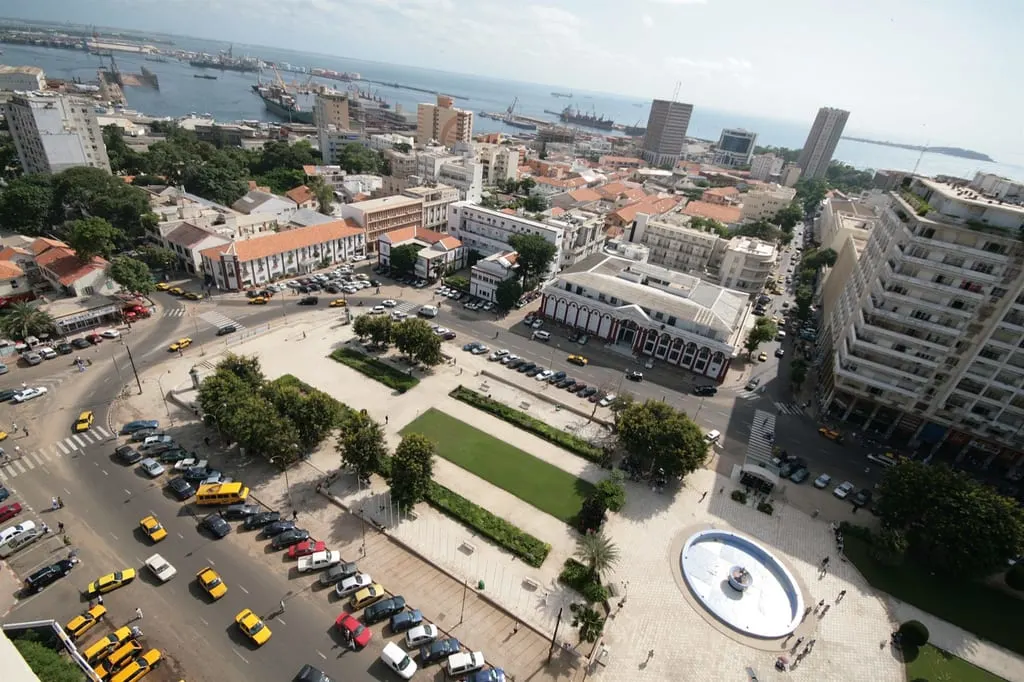
Cover context image: Dakar-Indépendance. This archival or illustrative image is not presented as a photograph of the reported event. Creator: mostroneddo. Original image and full attribution. License: CC BY 2.0. Resized and compressed for web display; the image retains its stated license.
Publication credits
Written (Français) by Jean Sovon Translated (English) by Adam Long. Original report published by Global Voices. Republished under Creative Commons Attribution 3.0. Adapted for Gistmax: formatting simplified; duplicate original-language quotations and embedded media omitted; cover photograph replaced. This republication does not imply endorsement of Gistmax by the author or publisher.