What is the role of Kenyan writer Ngũgĩ wa Thiong'o in French-speaking Africa?
By Rebecca Cluett · 2025-07-06
Reported by Rebecca Cluett. Originally published by Global Voices on 06 July 2025. This is an archived report; dates and circumstances refer to its original publication.
In light of the death of Kenyan writer Ngũgĩ wa Thiong’o on May 28, 2025, many literary fans are reflecting on his influence in French-speaking Africa. How is this author, who wrote first in English and then Kikuyu , his maternal language, regarded by those African authors who write in French?
Ngũgĩ wa Thiong’o was born in 1983 in a Kenya that was still under British colonial rule. He studied English and then began a threefold career as a writer, a university researcher, and a journalist, which took him to Uganda and then to London.
Toward the end of the 1970s, he started to write in Kikuyu , his mother tongue, and abandoned English for his prose through the 1980s. Exiled in London and then California, he continued to produce many essays and plays. He made the decision to return to Kenya with his wife in 2004 but the couple were attacked in their apartment, during which his wife raped and Ngũgĩ wa Thiong’o's face burned. He died in the United States on May 28, 2025.
In his country, Ngũgĩ wa Thiong’o is an important icon of Kenyan literature. Global Voices interviewed Kenyan poet Njeri Wangarĩ, a Kikuyu language activist, via email on what this author represents for her :
The choice of language
As a fiction writer, he wrote much about colonialism and explored this topic in the still-relevant reference book “ Decolonising the Mind ” (1986). In this, work he deals with the question of choice of language in writing for post-colonial African authors. He speaks of the English language as a “ cultural bomb ” in Africa.
This question of choice of language has reverberated throughout Africa, including French-speaking countries, as noted by Réassi Ouabonzi, also known by the name Lareus Gangoueus, a Congoleseman living in Paris who facilitates the literary blog “Chez Ganngoues” as well as the collaborative platform “ African Literary Chronicles . ” Interviewed by email , he explains:
At the return African Presence (Présence Africaine) event in October 2019 in Paris, I was struck by Ngũgĩ wa Thiong’o's radical statement on the theme of “Translating to Transmit” which quickly led him to ask the question of how we could define African Literature. Is it possible to envisage an African literature that is not spoken, which is not written in Indigenous languages? In the context of this encounter he addressed the recurrent objections from Africans at the limitations of writing in Kikuyu, in Shona or Lingala, in terms of the reach of literary works and the access to the rest of the world. Never one to take the easy route, he gave translators the mission of the work of translating from Swahili into French, Arabic or English but also into Lingala or Zulu.
Wangarĩ adds:
He represents an oracle; his prophecies about what will become of our future generation if we continue to abandon our mother tongue turned me into his disciple. And with that, a responsibility to continue his work of writing and creating spaces where children and writers can share in the joy of African stories told in their language.
A pan-African writer who remains unrecognised in French
Ngũgĩ wa Thiong’o's body of work went beyond the borders of his country of origin and the English and Kikuyu languages, as is noted in this article in the online commentary site The Conversation in May 2025:
The recognition of exceeds his pioneering role in his home country. He is particularly known for has unique telling of the everyday lives of Africans, always with a fairness and fidelity consistent with the principles of equality and social justice.
But strangely, his influence remains modest in French, as is underlined in this article from May 2025 in the online site En Attendant Nadeau :
Despite the thunder clap that was the death of this great African writer for Africa and the English-speaking world as a whole, nobody was surprised at the muted and understated media coverage in France given that the cultural institutions (media, print, festivals, public organization) have done everything they can for the past 40 years to ensure that the French-speaking public are unaware not only of the man bu also of his works. In effect, as noted by one of his translators, Jean-Pierre Orban, in a touching interview on the day of his death ‘It is uphill battle to have an piece of Ngũgĩ's work published in French.’
As is remarked by the Togolese Writer Sami Tchak, who Global Voices interviewed by email, Ngũgĩ wa Thiong’o is often mentioned for his political message, but not always seen as a writer:
What have we read of his? Have we read his writing? In which language? and when? Here is a writerwho's fame depends much less on his work than his politics on language; writing partly in Kikiyu, his mather-tongue, rather than in English, even though European languages are the ones in which he is, in the main, read. Here is an author discussed by many, even without having read his books, because it is enough to praise his commitment to think that he has been given the tribute he deserves. Perhaps this is a problem, as it is their work that should be an author's legacy. Therefore, we should read the works of in whatever language we can, this is the only way that we can contribute to making it part of the African and global literary pantheon.
He remains hopeful that more translations will lead to greater exposure of Ngũgĩ wa Thiong’o's body of work in Francophone countries
Image credit
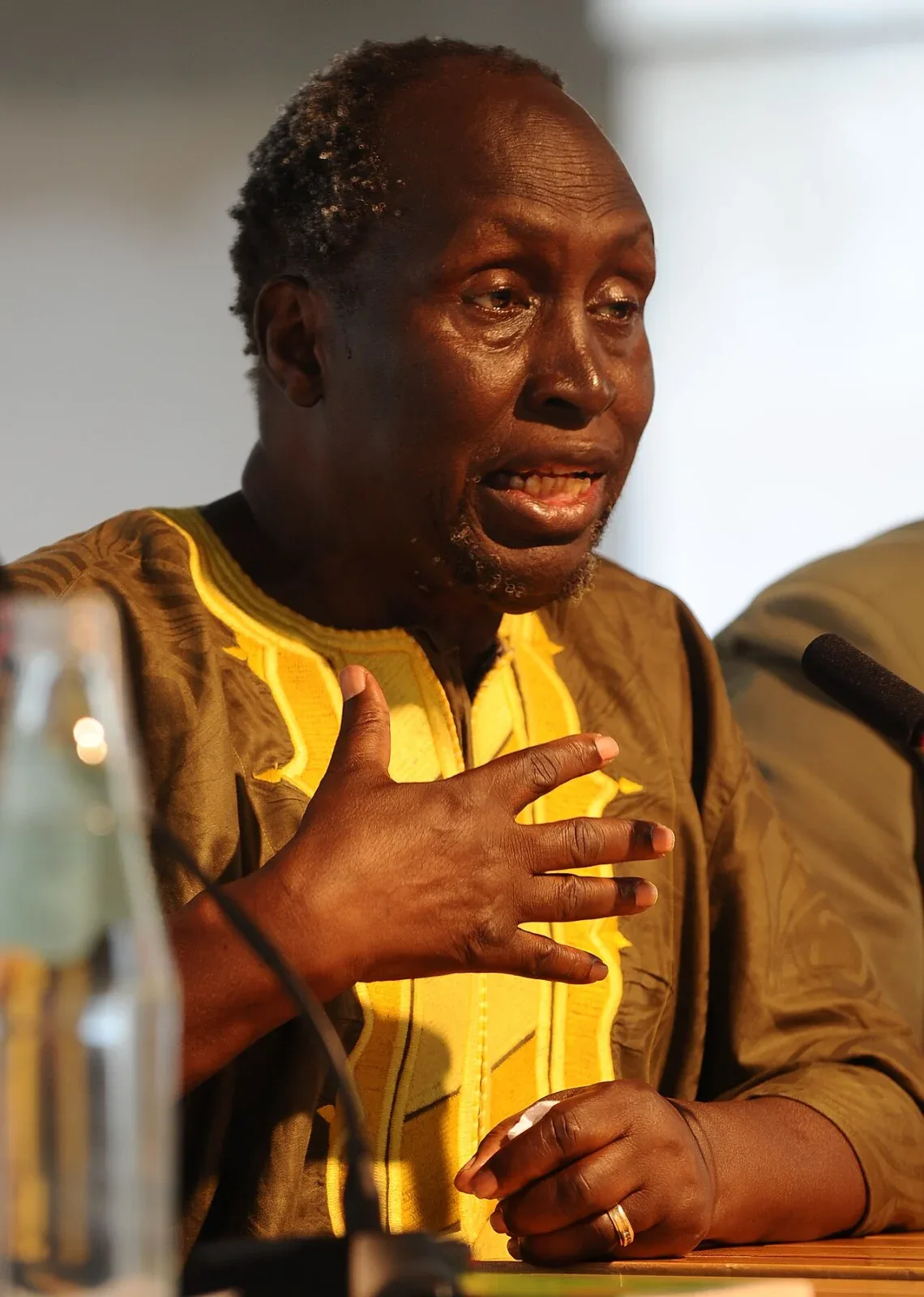
Cover context image: Ngugi wa Thiong'o - Festivaletteratura 2012. This archival or illustrative image is not presented as a photograph of the reported event. Creator: Niccolò Caranti. Original image and full attribution. License: CC BY-SA 3.0. Resized and compressed for web display; the image retains its stated license.
Publication credits
Written (Français) by Filip Noubel , Jean Sovon Translated (English) by Rebecca Cluett. Original report published by Global Voices. Republished under Creative Commons Attribution 3.0. Adapted for Gistmax: formatting simplified; duplicate original-language quotations and embedded media omitted; cover photograph replaced. This republication does not imply endorsement of Gistmax by the author or publisher.