Interview with the author of a new French–Ewe dictionary in Togo
By Jean-Christophe Brunet · 2025-01-29
Reported by Jean-Christophe Brunet. Originally published by Global Voices on 29 January 2025. This is an archived report; dates and circumstances refer to its original publication.
In West Africa, a new French–Ewe dictionary is now available to facilitate and boost the learning of this language, primarily spoken in Togo.
Belonging to the Niger–Congo language family , Ewe is spoken in Ghana , Togo , and Benin . It unites more than 7.5 million speakers in these three countries, with many cultural traditions in common. In Togo, the language is spoken by a large proportion of the population, and has been recognized as a national language in the constitution since 1975. However, its integration into the education system remains incomplete.
Read also: Which local language is most widely spoken in Togo?
Published in the first half of 2024, the dictionary titled “Ele nam be mado Eʋəgbə” (“I must express myself in Ewe” or “I have to speak Ewe”) is a 562-page work containing 120,000 words and expressions. Kuizian Atitso Baba is the Togolese author of this significant linguistic work, which allows the Ewe-speaking community to strengthen its reading, writing, and understanding of its native language despite the competition of other languages in the country, such as French.
Kuizian aims to promote professional teaching of Ewe within the educational sector in the region. Speaking to Global Voices via WhatsApp, the author discussed the genesis of this initiative and outlined his future plans for repositioning the Ewe language among local languages in Africa.
Jean Sovon (JS): How long has the Ewe language been codified in written form? Is it widely present in its written form in Togolese society?
Kuizian Atitso Baba (KAB): According to information I’ve gathered, Ewe phonetics is said to have originated in 1847. It was introduced by German traders settled in Anlo , near the town of Keta in the Volta region of southern Ghana. However, the systematic study and codification of the Ewe language officially started in 1891, with the Germans J. Knüsli , Schlegel, and Westermann, working alongside the Anlo Ewe community. This work led to the translation of the Bible into Ewe. Unfortunately, since then, Ewe lexicological and phonological studies have remained incomplete.
JS : How did this dictionary come about? Was it a team effort? Were there any other monolingual or bilingual dictionaries? Will there be an online version?
KAB: The creation of the French–Ewe dictionary stems from a simple observation: a community’s language is the core of its identity. When the language is studied, spoken, and written, it evolves by adding new words to its vocabulary. This is not the case for Ewe, the language of the Ewe people. Why has research on Ewe lexicography and, more specifically, its phonetics remained so incomplete since the German lexicological studies, and why has it failed to address area such as technology, science, and economics, which are key drivers of a country’s development?
The creation of the French–Ewe dictionary was a collaborative effort. In addition to the resource people I met during trips to collect and study words, terms, technical vocabulary, and idiomatic expressions from the Ewe cultural area, I benefited from the close collaboration of Professor Joseph Koffi Nutәƒe TSIGBE and Dean Gédéon ASI, with whom the Ewe institute, named the Institute for Research in Endogenous Development Communication (IRCED), was established, as well as of Ms. Amè Akoele Aziakor.
Long before the publication of my work, several bilingual dictionaries had been released: the Wörterbuch der Eẇe-Sprache: Éẇé Deutsch Eẇé Wörterbuch (Dictionary of the Ewe Language: Ewe–German–Ewe Dictionary) was published in 1905 by D. Westermann; the Dictionnaire Français-Éwé Togo (The French-Ewe dictionary)was published by K. Adzomada; and the Dictionnaire Éwé-Français (Ewe-French dictionary) was written by Jacques Rongier, a French linguist.
To date, a monolingual Ewe–Ewe dictionary does not exist, and there are no plans for an online version of the French–Ewe dictionary. However, a website is being developed to promote the Ewe language through online learning.
Read also : Digital technology: Promoting the use of Togolese national languages
Kuizian Atitso Baba shares more about his initiative with the VOA Afrique team in this video report.
JS: Who will be the main users of this dictionary?
KAB : This French–Ewe dictionary is primarily intended for senior officials in the Togolese public administration and Ewe speakers in the Togolese diaspora. Indeed, Ewe textbooks are almost non-existent in bookstores and libraries. The Ewe equivalents for certain disciplines such as philosophy, engineering, literature, mathematics, arithmetic, and calculus, as well as terms like magistrate and notary, are absent from the few existing textbooks or documents. As a result, foreign languages alienate Ewe speakers, creating a divide between the elites of Togolese high administration and their communities of origin on one hand, and between native Ewe speakers living or born abroad and their ancestral communities on the other.
JS: Has the initiative received support from the country’s educational authorities? What comes next?
KAB : Victoire Tomegah Dogbé , the prime minister, commended the initiative after the book was officially presented to her during a meeting with the author on May 8, 2024.
Revision work on the dictionary has resumed in preparation for the publication of a revised edition. This updated version will incorporate new words and expressions suggested by users of the French–Ewe dictionary. Simultaneously, efforts are underway to develop a bilingual Ewe–French dictionary and a monolingual Ewe–Ewe dictionary.
Read also: Togolese music scene embraces globalization without abandoning its roots
JS: Is the Ewe language being preserved within the diaspora?
KAB: Despite the near absence of Ewe textbooks, native Ewe speakers living abroad continue to speak the language, although they often lack words and expressions equivalent to those in French, English, or German. At the book launch ceremony, representatives and relatives of Ewe-speaking diaspora members purchased multiple copies of the dictionary.
Continuing his commitment to promoting the Ewe language globally, the author has set himself another mission: the publication of a grammar and spelling guide for Ewe. This second book is designed to facilitate the learning of the Ewe language and its professional use.
Image credit
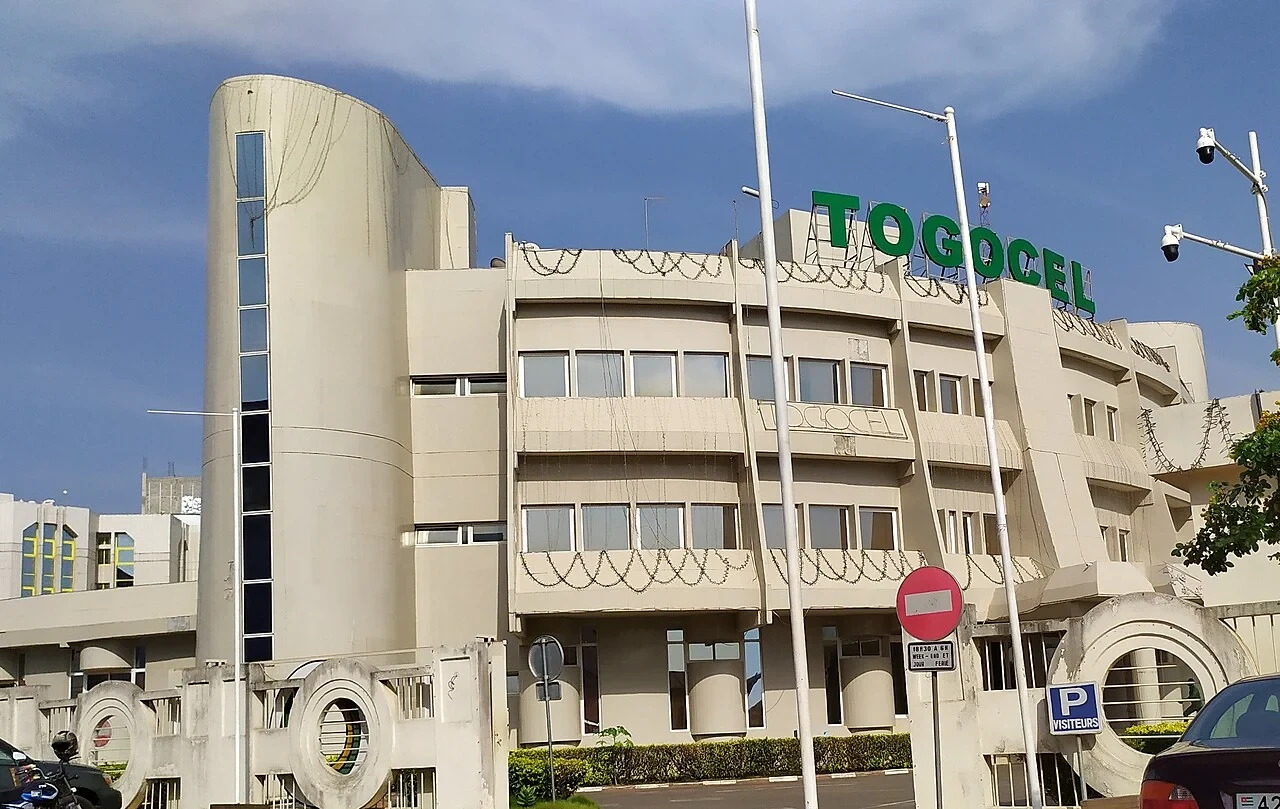
Cover context image: Togocel Lomé 01. This archival or illustrative image is not presented as a photograph of the reported event. Creator: Serieminou. Original image and full attribution. License: CC BY-SA 4.0. Resized and compressed for web display; the image retains its stated license.
Publication credits
Written (Français) by Jean Sovon Translated (English) by Jean-Christophe Brunet. Original report published by Global Voices. Republished under Creative Commons Attribution 3.0. Adapted for Gistmax: formatting simplified; duplicate original-language quotations and embedded media omitted; cover photograph replaced. This republication does not imply endorsement of Gistmax by the author or publisher.